

DOOH Attention Study Shows Brand and Sales Impact
Amplified and QMS reveal new attention study showing how DOOH drives sales and builds brands quickly

Amplified and QMS reveal new attention study showing how DOOH drives sales and builds brands quickly
New research shows Digital Out of Home can begin driving measurable brand and sales outcomes at around one active second of attention.
Amplified, in partnership with leading Digital Out of Home media company QMS, has released the latest phase of its landmark attention research, Turning Attention into Brand Equity: Digital Out of Home’s Superpower.
The study expands on QMS and Amplified’s original 2024 attention research, using real-world biometric measurement to examine how people naturally attend to Digital Out of Home across both pedestrian and vehicular journeys.
Analysing more than 400 hours of footage across 9 days, 200+ campaigns and more than 12,000 real-time biometric ad views from 300 participants, the research provides one of the most comprehensive views yet of how human attention behaves in outdoor environments.
The findings show that DOOH operates with a different attention model to many traditional digital environments, requiring less active attention to begin delivering measurable brand and sales outcomes.
Where many digital environments typically require around 2.5 seconds of active attention before meaningful memory effects begin to appear, the QMS and Amplified study found that DOOH can begin driving measurable outcomes at around one active second of attention.
The research also found that DOOH delivers a substantial total attention footprint, averaging 24.2 seconds across City of Sydney street furniture assets and 13.9 seconds across large format roadside billboards.
Importantly, the study shows that passive attention can play a different role in DOOH compared with many screen-based environments. Rather than simply representing weak or lost attention, passive attention in DOOH can help create the conditions for active attention to occur.
The study also highlights the role of visible distinctiveness, showing that creative quality and branding are critical to converting attention into commercial effect. Good creative earns the glance, but strong branding helps ensure the brand receives the credit.
Dr Karen Nelson-Field, Founder and CEO of Amplified, said the research reinforces the need to understand attention in context.
“What stands out in this study is the efficiency of DOOH. In many digital environments, we typically look for around 2.5 seconds of active attention to begin seeing an effect, particularly for memory. Here, DOOH begins to deliver measurable brand and sales outcomes at around one active second.
“That doesn’t mean attention is easy to earn, but it does show that in the right environment, even a short active glance can do valuable commercial work.
“The study also reinforces that media and creative cannot be separated. DOOH creates the opportunity for attention, but visible distinctiveness is what helps bank that attention into brand equity. Good creative earns the glance; strong branding ensures the brand gets the credit.
“For advertisers, the implication is clear: the strongest outcomes come when site selection, time-in-view and distinctive creative are planned together.”
The research captured both Digital Large Format roadside assets and City of Sydney street furniture, providing a detailed view of how different DOOH environments create different levels of attention opportunity.
For advertisers, the findings offer practical implications for planning, creative development and campaign measurement. Rather than treating DOOH as a simple reach or visibility channel, the study shows how attention quality, exposure environment and creative distinctiveness combine to support both immediate sales response and longer-term brand memory.
The study also adds to Amplified’s broader body of attention research, which helps brands, agencies and media owners understand what people actually see, process and remember across media environments.
As the industry continues to move beyond proxy metrics such as impressions, viewability and completion rates, research like this helps show why attention should be treated as a critical layer in media effectiveness.
Key findings from the study include:
- DOOH can begin delivering measurable brand and sales outcomes at around one active second of attention.
- City of Sydney street furniture generated an average total attention footprint of 24.2 seconds.
- Large format roadside billboards generated an average total attention footprint of 13.9 seconds.
- Passive attention can help create the conditions for active attention in DOOH environments.
- Visible distinctiveness plays a critical role in turning attention into brand equity.
- The strongest outcomes come when media environment, time-in-view, creative quality and branding work together.
The findings were launched by QMS as part of the next phase of its attention research programme and continue the partnership between QMS and Amplified in bringing real human attention data into the future of Out of Home planning and effectiveness.
About Amplified
Amplified is the global authority in attention, helping the advertising industry move beyond proxy metrics to understand what people actually see, notice and engage with.
Through live-environment research and predictive AI solutions, Amplified helps brands, agencies and media owners understand how creative and media are likely to perform before spend is committed.
For more information, visit www.amplified.co.
About QMS
QMS is a leading Digital Out of Home media company, connecting brands with audiences through premium outdoor environments across Australia.
Through its continued investment in research, data and technology, QMS helps advertisers better understand how Out of Home can drive attention, build brands and deliver commercial impact.
Not all impressions are equal, and reach doesn’t guarantee engagement. Amplified’s Campaign Strategy tools use real human attention metrics to help you predict and optimise media performance before launch.
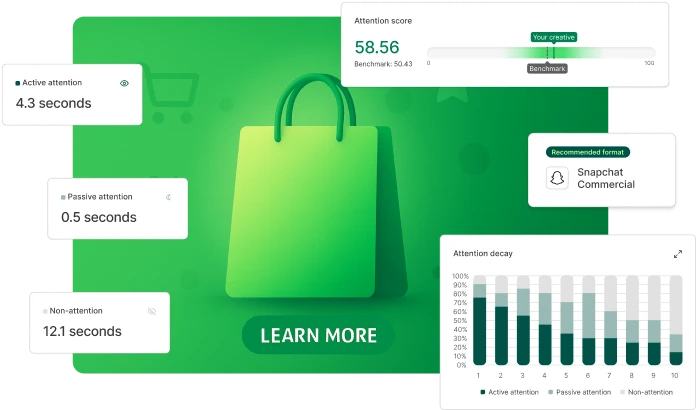
Your campaign's already live, great. But even the best executions can benefit from a fresh lens. Amplified’s in-flight attention measurement gives you clear, science-backed insights into how your creative and placements are performing while there's still time to level-up results.
Through bespoke research studies, we help brands, agencies and platforms measure attention where it matters most, across TV, social, CTV, DOOH and more. This in-depth research helps you ensure that your media investments are seen, engaged with, and delivering true impact.
Test, refine and optimise with attention-first insights. From creative testing to bespoke data analysis, we help brands, agencies and platforms improve performance.
Amplified offers flexible, API-driven integrations, making it easy to activate real human attention data within your existing platforms and tools. Whether you’re an agency, publisher, platform or brand, our integrations ensure attention insights are directly embedded into your workflow, powering smarter, more effective decision-making.
If you’re looking to take attention beyond a one-off study or standard integration, a partnership with Amplified unlocks exclusive access to research, insights, technology and strategic collaboration that transforms how you measure, plan and execute media.



.webp)
.webp)

.webp)
.webp)
.webp)